General safety overview of cuplock scaffolding
Is cuplock scaffolding considered a safe system in modern construction
In today’s construction industry, cuplock scaffolding is generally regarded as a safe and reliable modular scaffolding system when it is properly designed, manufactured, installed and maintained.
Unlike traditional tube and coupler scaffolding, cuplock scaffolding is not assembled freely on site.
It is based on a standardized structural system with predefined connection points and component compatibility.
This system-based design allows engineers and site teams to better control load paths, stability and overall structural behavior.
From a practical point of view, cuplock scaffolding is widely used on projects that involve:
These application scenarios themselves require a high level of structural safety.
How safety is defined for cuplock scaffolding systems
When discussing the safety of a cuplock scaffolding system, safety does not only mean whether workers can stand on the platform.
It mainly refers to the following engineering and operational aspects:
the ability of the structure to safely carry all design loads
the stability of the scaffold under vertical and horizontal forces
the reliability of all node connections
the resistance to installation errors and accidental impacts
the long-term performance of components during repeated use
In other words, cuplock scaffolding safety is a combination of structural performance and site management.
What makes cuplock scaffolding different from traditional scaffolding in safety design
The key difference lies in systemization.
Cuplock scaffolding uses a fixed node connection system, which offers:
controlled geometry of the structure
repeatable joint performance
reduced dependence on loose fittings
This greatly improves consistency on site and reduces the possibility of unsafe assembly caused by mixed components or improper coupler installation.
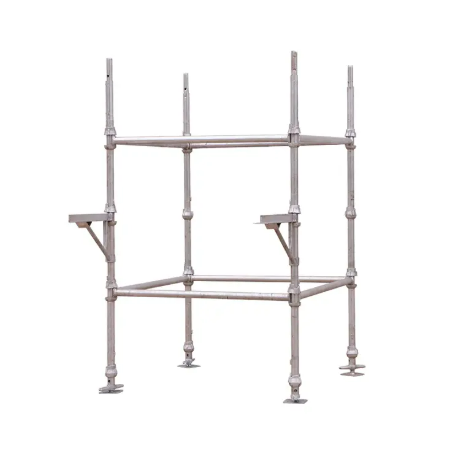
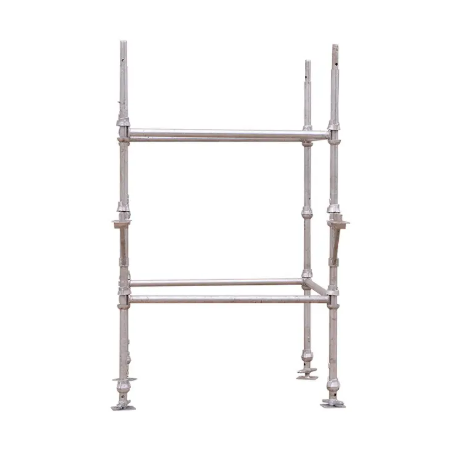
Structural safety design of cuplock scaffolding
Cup joint node design and its safety function
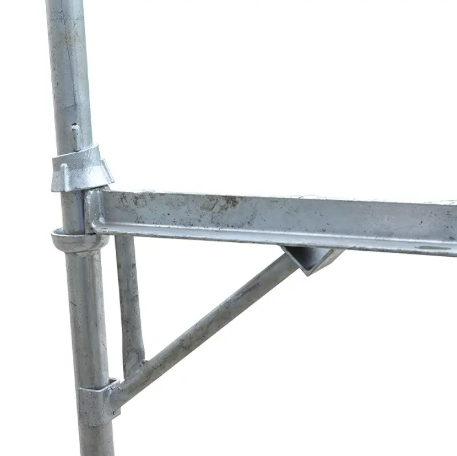
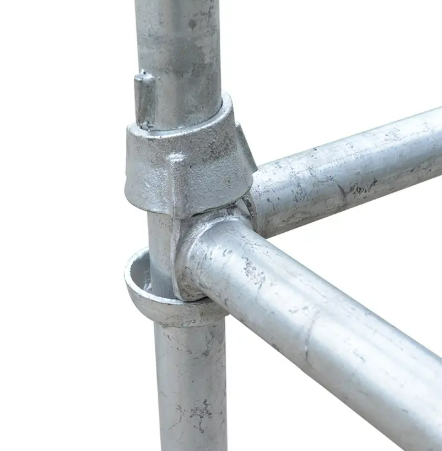
The heart of cuplock scaffolding safety lies in its cup joint.
Upper cup and lower cup locking principle
Each vertical standard is welded with fixed lower cups at regular intervals.
When ledgers and braces are inserted, a movable upper cup is rotated downward to lock all blade ends together.
This locking principle provides:
a positive mechanical lock
uniform clamping of all connected members
clear visual confirmation that the joint is properly closed
Once the upper cup is fully rotated and seated, the joint becomes a rigid connection point.
Blade end engagement and anti-slip behavior
The blade ends of ledgers and braces are shaped to sit securely on the lower cup.
This design helps:
prevent accidental slipping during installation
stabilize the members before final locking
maintain correct alignment of components
The geometry of the blade and cup ensures that loads are transferred directly through steel-to-steel contact.
Load transfer mechanism in cuplock scaffolding
Vertical load transfer through standards
In a cuplock scaffolding structure, vertical loads from:
working platforms
formwork systems
fresh concrete loads
are transferred directly into the vertical standards.
The standards act as continuous load-carrying columns, transferring forces down to base jacks and foundations in a clear and direct path.
This simple vertical load path is one of the main reasons why cuplock scaffolding is widely used for heavy-duty support structures.
Horizontal force distribution through ledgers and braces
Horizontal forces, such as:
wind loads
worker movement
equipment movement
are mainly resisted by ledgers and diagonal braces.
The regular grid layout and rigid node connections allow horizontal forces to be distributed over multiple bays instead of concentrating at a single point.
Structural redundancy and system integrity of cuplock scaffolding system
A properly configured cuplock scaffolding system contains multiple interconnected load paths.
This provides structural redundancy, meaning:
System integrity is improved because all components are designed to work together within a unified geometry.
Connection safety and node reliability
Mechanical locking performance of cuplock joints
Cuplock joints rely on mechanical locking rather than friction-based clamping.
This offers several safety advantages:
Once locked, the connection does not depend on bolt tightening or torque control.
Resistance to loosening and accidental release
Under normal construction vibration and working activities, the cuplock joint is highly resistant to loosening.
The rotating upper cup:
This significantly reduces the risk of accidental release caused by site movement or repeated loading.
Consistency of node performance in large cuplock scaffolding systems
For large-scale projects, thousands of joints may be installed.
The standardized joint geometry of cuplock scaffolding helps ensure that:
every node behaves in a similar manner
joint stiffness remains uniform across the structure
local weak points caused by mixed fittings are minimized
This consistency plays a key role in overall system safety.
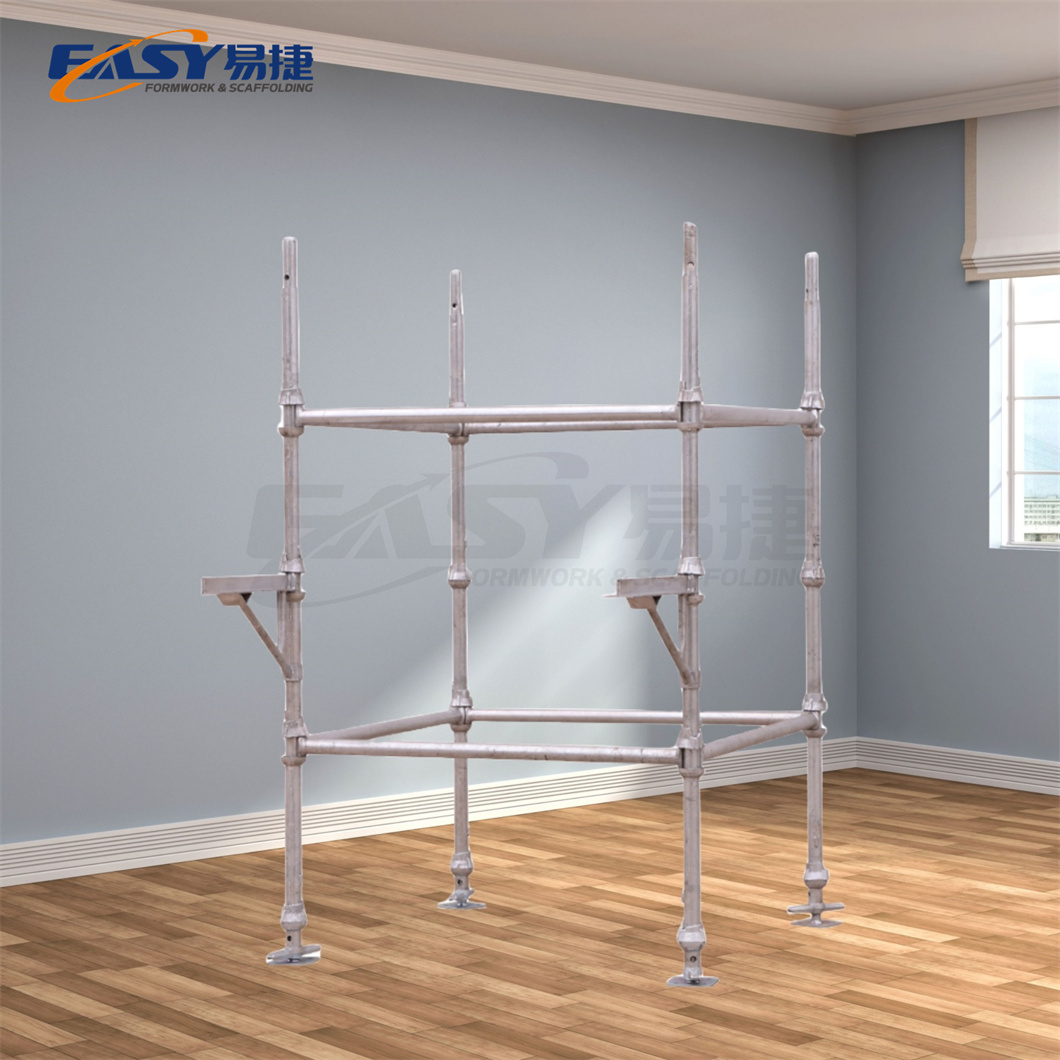
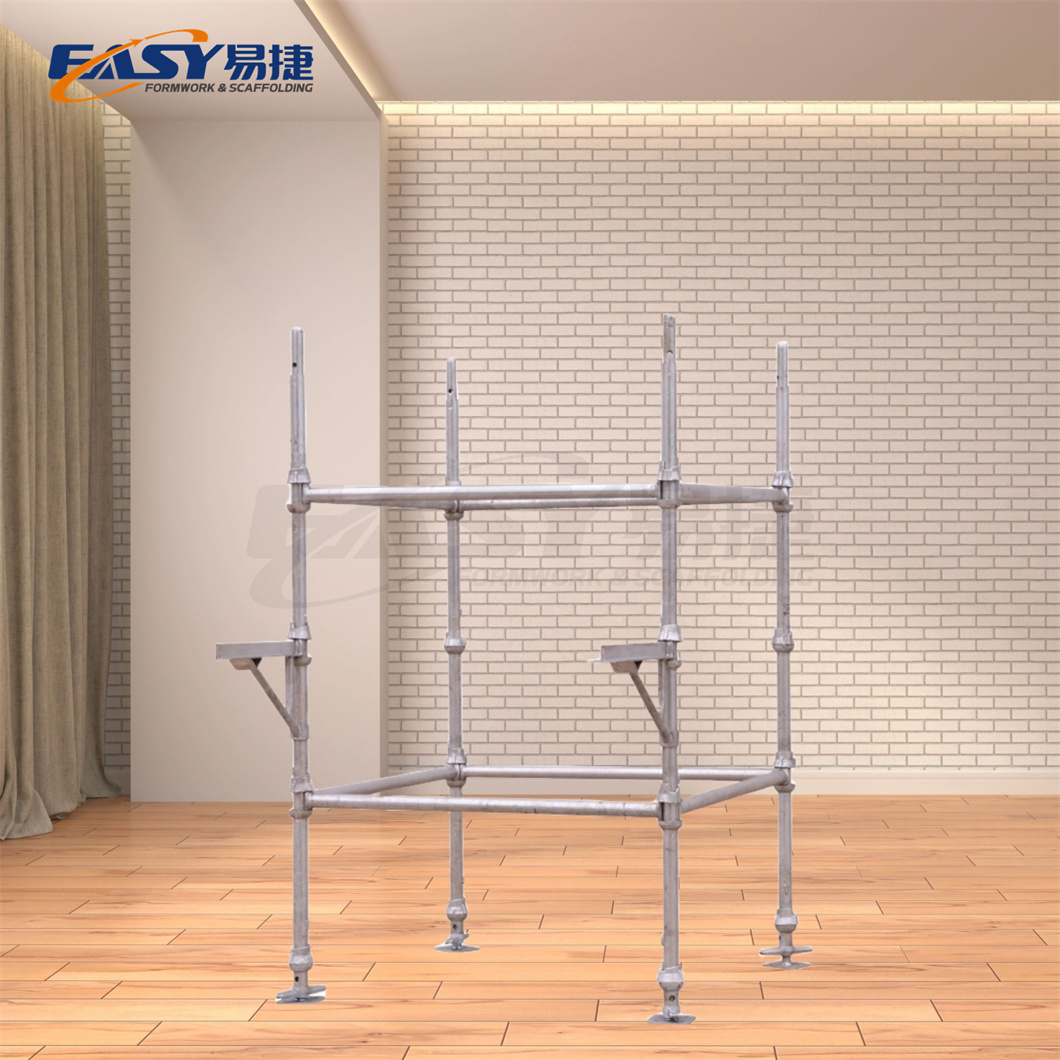
Load capacity and stability safety of cuplock scaffolding
Vertical load capacity and safety margin
Cuplock scaffolding is designed to carry substantial vertical loads when used for shoring and formwork support.
In practical engineering design, safety is ensured through:
This means that the working loads are always kept well below the ultimate capacity of the structure.
Lateral stability and resistance to horizontal loads
Lateral stability is achieved through:
Together, these elements allow the scaffold to resist horizontal loads and maintain its geometry during construction activities.
Influence of height, spacing and layout on safety performance
The safety level of cuplock scaffolding is directly affected by:
vertical height of the structure
spacing between standards and ledgers
bracing arrangement and tie-in locations
As the height increases, closer spacing and additional bracing are normally required to maintain adequate stability.
Why cuplock scaffolding is suitable for heavy-duty support structures
Cuplock scaffolding is especially suitable for heavy-duty applications because:
vertical load paths are short and direct
joint behavior is stable and repeatable
structural layouts are easy to control on site
For slab and beam formwork, transfer structures and high shoring towers, these characteristics provide a solid safety foundation.
Safety of cuplock scaffolding for different applications
Safety of cuplock scaffolding for access platforms
When cuplock scaffolding is used as an access platform, safety is mainly related to working conditions and fall protection.
A properly configured access structure normally includes:
Because the structural grid is rigid and the node geometry is fixed, the platform remains stable even when workers and materials are moving continuously.
Safety of cuplock scaffolding for slab and beam formwork support
For formwork support, cuplock scaffolding acts as a temporary load-bearing structure.
Safety is achieved through:
regular spacing of vertical standards
systematic bracing arrangement
clear and direct vertical load transfer
The predictable structural behavior of the cuplock scaffolding system makes it easier for engineers to design safe layouts for slab and beam loads.
Safety of cuplock scaffolding for shoring towers and high support structures
In high shoring towers, stability becomes the most critical safety issue.
Cuplock scaffolding performs well in such applications because:
the vertical alignment of standards is easy to control
joint stiffness remains consistent at different levels
bracing can be arranged symmetrically
With correct engineering design and proper installation, cuplock scaffolding can safely support high and heavily loaded temporary structures.
Safety of cuplock scaffolding for industrial maintenance and infrastructure projects
In industrial plants and infrastructure projects, working environments are often congested and irregular.
Cuplock scaffolding improves safety by:
allowing modular and adjustable layouts
providing rigid and predictable working platforms
reducing the need for on-site improvisation
This is particularly important in confined areas, elevated locations and complex steel structures.
Installation safety of cuplock scaffolding
Standard erection sequence and its impact on safety
A safe erection sequence is essential for cuplock scaffolding.
A typical safe sequence includes:
preparing and checking the foundation
setting and leveling base jacks
installing standards and ledgers level by level
installing diagonal braces as the structure rises
installing platforms and edge protection
Following a systematic sequence prevents partially stable frames and reduces the risk of temporary instability during assembly.
Critical installation steps affecting cuplock scaffolding safety
Correct installation directly determines the final safety performance of the structure.
Base preparation and leveling
The foundation must be flat and have sufficient bearing capacity.
Uneven or weak ground conditions can significantly reduce global stability.
Correct installation of ledgers and braces
Ledgers and diagonal braces must be installed according to the designed layout.
Missing or incorrectly positioned braces can lead to excessive deformation and reduced lateral stability.
Proper locking of upper cups
All upper cups must be fully rotated and seated.
Incomplete locking is one of the most common causes of unsafe joints.
Typical installation errors that affect safety
On site, the most frequent problems include:
These issues can seriously affect the safety of the cuplock scaffolding structure if not corrected immediately.
Inspection and daily safety management of cuplock scaffolding
Inspection before use
Before workers access the structure, the scaffold should be checked for:
correct locking of all joints
completeness of braces and ledgers
proper installation of guardrails and toe boards
stable and level base support
Inspection during use
During construction activities, regular visual inspection should focus on:
Inspection after dismantling and before reuse
After dismantling, components should be checked for:
deformation of tubes and blade ends
damage to cups and locking surfaces
corrosion or surface coating failure
Only qualified components should be reused.
Record keeping and traceability for cuplock scaffolding system components
For large projects, maintaining inspection records and component tracking helps:
Material and manufacturing factors affecting safety
Steel material quality requirements
High-quality structural steel is essential for maintaining load capacity and ductility under site conditions.
Welding quality of cups and structural joints
Poor welding at cup joints or structural connections may cause:
Consistent welding quality is therefore a key safety factor.
Forging quality of ledger and brace blade ends
Blade ends must be accurately forged to ensure full and stable contact with the cup.
Poor blade geometry may lead to:
incomplete seating
uneven load distribution
reduced joint stiffness
Dimensional accuracy and tolerance control
Accurate tube length and cup spacing ensure:
This directly affects both stability and ease of safe installation.
Surface treatment and corrosion protection
Good surface protection reduces corrosion and maintains long-term strength, especially for scaffolding used repeatedly in outdoor environments.
Safety performance of cuplock scaffolding compared with other systems
Cuplock scaffolding vs tube and coupler scaffolding in safety
Compared with traditional tube and coupler scaffolding, cuplock scaffolding provides:
more consistent joint performance
reduced dependence on manual tightening
better control of structural geometry
This generally results in fewer installation-related safety risks.
Cuplock scaffolding vs ringlock scaffolding in node reliability
Both systems use positive mechanical locking.
Cuplock joints, however, provide very consistent locking behavior in repetitive layouts, which helps maintain uniform stiffness and predictable performance across large structures.
Why cuplock scaffolding system reduces installation-related safety risks
Because several members are locked simultaneously at one node and the joint geometry is fixed, the cuplock scaffolding system helps reduce:
Environmental and site factors influencing cuplock scaffolding safety
Ground bearing capacity and foundation conditions
Weak or uneven foundations remain one of the most critical external risks for any scaffolding structure.
Wind load and weather conditions
Strong winds, rain and temperature changes may influence:
Temporary ties and additional bracing may be required under severe weather.
Working environment and site congestion
Limited working space and nearby structures can complicate bracing layout and access arrangements, which must be addressed during planning.
Influence of site management on cuplock scaffolding safety
Good site coordination, supervision and access control significantly reduce unsafe modifications and unauthorized dismantling.
Safety guidelines and best practices for cuplock scaffolding system
Load control and platform management
Working loads must be controlled and evenly distributed.
Overloading platforms is one of the most common causes of unsafe conditions.
Bracing and tie-in arrangement recommendations
Diagonal bracing and structural ties should follow engineering design, especially for tall or slender structures.
Safe access and edge protection configuration
Safe access routes, guardrails and toe boards must be installed before platforms are put into service.
Training and supervision requirements
Installation and dismantling should be carried out by trained workers under competent supervision.
FAQs
Is cuplock scaffolding safe for high-rise projects
Yes, when properly designed, braced and tied, cuplock scaffolding can be safely used in high-rise access and shoring applications.
Is cuplock scaffolding safe for heavy concrete structures
Yes.
Cuplock scaffolding is widely used for heavy slab and beam support because of its stable load paths and predictable joint behavior.
How long can cuplock scaffolding be safely reused
With correct inspection, maintenance and surface protection, cuplock scaffolding can be reused for many years.
Conclusion
Overall, cuplock scaffolding is a highly safe and reliable temporary structure when it is properly designed, manufactured, installed and managed.
Its mechanical locking joints, clear load paths, consistent geometry and modular layout give the cuplock scaffolding system strong advantages in both structural safety and site control.
As a professional cuplock scaffolding manufacturer, Tianjin Easy Scaffolding Co., Ltd provides a complete and reliable cuplock scaffolding system covering standards, ledgers, braces, jacks and full safety accessories. Backed by an integrated manufacturing and export supply chain, strict control of steel materials, welding and forging processes, and stable hot-dip galvanizing quality, the company ensures consistent dimensional accuracy and dependable joint performance for every project. With extensive experience in overseas building, infrastructure and industrial projects, Tianjin EASY is able to support customers not only with high-quality cuplock scaffolding products, but also with engineering-oriented configuration support, fast delivery capability and long-term system compatibility—helping contractors achieve safer, more efficient and more cost-effective scaffolding solutions on site.