
English 
T: +86-13212036031
E: mason@easy--scaffolding.com
E: mason@easy--scaffolding.com
Room No.203, Building No.5, Huijin Plaza, West Fifth Road No.35, Tianjin Airport Economic Zone, Tianjin, China

Views: 0 Author: Site Editor Publish Time: 2026-05-04 Origin: Site


Transitioning from traditional tube-and-fitting setups to a modular framework involves substantial capital risk. Every contractor understands the heavy financial burden of upgrading site equipment. The real question is not whether the cuplock scaffolding system is universally "good." Instead, you must determine if its specific load profiles, assembly speed, and geometric limitations truly align with your active project portfolio. Misaligning your equipment with site realities drains budgets fast and causes severe project delays. This guide provides a hype-free, evidence-backed breakdown of Cuplock engineering realities, hidden limitations, and critical procurement criteria. You will gain actionable insights to evaluate load-testing standards and avoid counterfeit materials, helping you make a secure bottom-of-funnel decision.
Speed & Labor: Connects up to 4 horizontal members in a single action, reducing assembly time by roughly 2-3x compared to traditional systems.
Structural Reality: Delivers a reliable 30–40 kN load capacity per standard, ideal for straight facades and standard commercial builds.
The Catch: Node intervals are rigid (typically 0.5m or 0.6m), and it lacks the 8-way versatility and higher load thresholds of Ringlock systems.
Procurement Risk: Counterfeit or poorly galvanized parts plague the market; verified load-testing certificates (EN 12810/12811, OSHA compliance) are non-negotiable.
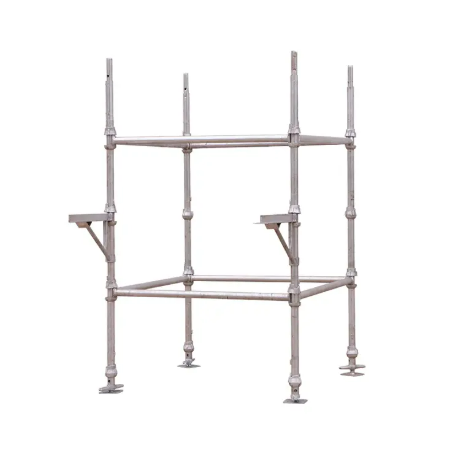
To understand why this system dominates many modern construction sites, we must examine its mechanical core. The foundation of the cuplock scaffolding design relies on a highly efficient locking node. This section breaks down the engineering principles making it a reliable choice for contractors worldwide.
The core innovation revolves around a unique cup-and-blade node. Vertical tubes, known as standards, feature fixed bottom cups welded at regular intervals. Horizontal ledgers have forged blade ends. Workers simply slot these blades into the bottom cup. Next, a sliding top cup drops down over the blades. A single hammer blow rotates and locks the top cup securely in place. This specific motion simultaneously secures up to four ledgers. It creates a highly rigid, load-bearing connection. There are no delicate threads to strip or complex alignments to manage.
Traditional scaffolding relies heavily on loose fittings, bolts, and specialized wrenches. This slows down assembly drastically. Workers frequently drop nuts, causing frustrating site delays. Cuplock eliminates loose components entirely. This directly lowers your labor hours. Site crews require significantly less specialized training to master the assembly process. Below is a brief comparison of assembly steps.
Traditional Method: Measure distance, align tubes, attach coupler, tighten nuts, check levels, repeat for every single connection.
Cuplock Method: Place standard, drop ledger blades into bottom cup, slide top cup down, strike once to lock.
Capital equipment must survive harsh environments. High-quality cuplock setups utilize comprehensive hot-dip galvanization. Manufacturers submerge the steel components into a bath of molten zinc. This process coats both the interior and exterior surfaces. It provides superior protection against rust and corrosion. Even in coastal or highly humid climates, a properly galvanized asset often exceeds a 10-year operational lifespan. Painted or electro-galvanized alternatives simply cannot offer this longevity.
Human error accounts for many site accidents. Workers sometimes forget to tighten a bolt on a traditional scaffold. The self-locking nature of the top cup mitigates this specific risk. Once hammered into position, the top cup firmly binds the ledgers. Heavy site vibrations from adjacent machinery will not loosen the connection. This drastically reduces the risk of ledger dislodgement, ensuring a stable working platform for your crew.
No system perfectly solves every engineering challenge. Vendors often highlight the strengths while glossing over real-world limitations. Contractors must evaluate the exact boundaries of their equipment. Understanding where the system fails helps you avoid costly mid-project redesigns.
Manufacturers weld cup nodes onto the standards at fixed intervals. Typically, these intervals measure 0.5 meters or 0.6 meters. This creates immense dimensional rigidity. Traditional tube-and-clamp setups allow workers to attach a coupler at any millimeter along a tube. Cuplock does not offer this micro-adjustability. If your project involves highly irregular architectural geometries, this rigid node placement becomes a severe hindrance. You cannot easily cheat angles or adjust platform heights outside the set node distances.
The main structural tubes are incredibly robust. However, specific accessory components remain vulnerable. For example, intermediate transoms and certain board brackets rely on small U-shaped connecting pins. Site crews easily drop these small pins in the mud. They also get lost constantly during transit between warehouses and job sites. Missing these minor components brings localized assembly to a grinding halt.
Every modular system has a physical limit. Cuplock maxes out at a four-way node connection. It typically offers a load limit ranging from 30 kN to 40 kN per standard. This handles standard commercial tasks easily. Yet, it cannot compete with top-tier modular solutions like Ringlock. Ringlock systems feature an 8-way rosette node and deliver massive load capacities spanning 40 kN to 60 kN. If you construct hyper-complex industrial plants or offshore oil rigs, Cuplock simply lacks the sheer load capacity and multi-angle flexibility required.
Equipment choice directly dictates your profitability. Applying the wrong system to a complex job destroys margins. We have categorized common project types below to help you map your current portfolio against the system capabilities.
Contractors see the highest returns when deploying this system on predictable, repetitive structures. Standard residential high-rises and commercial office blocks are perfect candidates. The straight facades allow crews to maximize erection speed. It also excels in masonry, rendering, and painting tasks where heavy materials sit on the platforms. If you frequently build loading bays or standard staircase towers, the standardized components make these structures highly repeatable. Furthermore, geographical location matters. Regions like the UK, the Middle East, and various Commonwealth nations boast massive local ecosystems. This makes cross-renting extra parts incredibly easy during unexpected peak seasons.
Some projects demand extreme structural versatility. You should upgrade to Ringlock when tackling complex industrial plants. Petrochemical facilities often require piping to pass directly through the scaffold structure. The 8-way node of Ringlock navigates these obstacles effortlessly. Curved offshore structures and suspended bridge repairs also require extreme shear resistance and multi-angle node connections. The fixed 90-degree nature of a 4-way cup node simply cannot trace tight, irregular curves safely.
You do not always need heavy-duty load bearing. Contractors should downgrade to simple frame scaffolding for low-height, low-load indoor tasks. If you only need to paint an interior ceiling or install light fixtures, heavy steel standards become a burden. Frame systems are ultra-lightweight. Two workers can snap a frame together in minutes. In these specific scenarios, rapid setup and mobility easily trump heavy load-bearing capability.
System Type | Best Application | Load Capacity | Node Versatility |
|---|---|---|---|
Frame Scaffolding | Low-load, indoor, painting | Low (approx. 10-15 kN) | None (pre-welded frames) |
Cuplock | Straight facades, masonry | Medium (30-40 kN) | 4-way connection |
Ringlock | Industrial, curved structures | High (40-60 kN) | 8-way connection |
Strategic purchasing requires a clear view of capital deployment. Scaffolding is not a consumable; it is a revenue-generating asset. Understanding the financial mechanics of this investment ensures your business maintains healthy cash flow.
Modular equipment requires higher upfront capital than traditional tubes and loose fittings. Manufacturers must machine the cup nodes to tight tolerances, driving up initial production costs. However, contractors recoup this capital premium rapidly. You will see drastically reduced labor erection hours on every subsequent project. Furthermore, eliminating loose nuts and bolts lowers your ongoing maintenance and replacement expenses. The initial sting of the purchase order fades quickly against lower monthly labor run rates.
Deciding whether to buy or rent depends entirely on your operational forecast. Each path serves a distinct business model.
Rent: Choose this route for one-off projects. If you face short-term budget constraints, renting preserves your working capital. It is also the smartest choice if your project scope varies wildly from month to month.
Buy: Choose this route if you operate consistent, repeated structural models. Contractors buying their equipment eliminate monthly rental bleed. You slowly build a tangible asset base. These physical assets strengthen your balance sheet and increase overall company valuation.
Disorganized scaffolding yards drain operational efficiency. Cuplock features highly standardized parts. You primarily deal with standards, ledgers, transoms, and base jacks. These distinct categories make warehouse stacking highly efficient. Yard workers can rapidly bundle identical ledgers into neat steel pallets. This standardization extends to logistics. Flat-bed transport becomes highly predictable. You optimize every inch of trailer space, directly reducing the logistical overhead of shipping air.
The global market is flooded with inferior steel products. A vendor might offer an incredible discount, but cheap scaffolding introduces catastrophic liability. Rigorous vetting is your only defense against structural failure. Follow this strict checklist before signing any purchase orders.
Never assume all steel is created equal. The load capacities advertised strictly rely on the underlying steel grade. Ensure your supplier uses high-yield structural steel. Industry best practices demand Q345 grade steel for the vertical standards. The horizontal ledgers should utilize Q235 grade steel at minimum. Request exact mill certificates to verify the chemical composition and yield strength.
Surface treatments dictate asset lifespan. Many cheap suppliers use painted finishes or thin electro-galvanization. These coatings chip easily, exposing the raw steel to moisture. You must request proof of hot-dip galvanizing thickness. Reliable suppliers guarantee a minimum micron standard, typically between 60 to 80 microns. This thick zinc layer prevents internal pipe corrosion, ensuring the structural integrity remains uncompromised over a decade.
Marketing brochures often inflate performance metrics. Never accept internal supplier claims regarding load limits. You must demand third-party testing certificates. Verify the equipment proves compliance with EN 12810, EN 12811, or regional OSHA standards. Legitimate manufacturers proudly supply testing documentation from recognized international laboratories.
The entire locking mechanism relies on exact geometry. Poorly welded cup nodes will cause the system to jam. If the blades do not slide smoothly into the cups, your site crew will waste hours fighting the equipment. Furthermore, ensure the supplier guarantees dimensional compatibility. If you plan to mix new stock with your existing inventory, slight manufacturing deviations make the parts incompatible. Demand physical samples to test against your current yard stock before buying in bulk.
Cuplock scaffolding is an exceptionally "good" system. It arguably represents the industry's most cost-effective middle ground. It efficiently bridges the gap between slow, labor-intensive traditional scaffolding and highly expensive, ultra-complex Ringlock systems. For contractors focusing on standardized commercial and residential builds, it offers unmatched reliability and assembly speed.
Your next steps require a close look at your internal data. Audit your typical project geometries and baseline labor costs. Determine if transitioning to this modular system yields a positive 24-month return on investment. If the numbers align, prompt your procurement team to request technical spec sheets, mill certificates, and third-party load certificates from qualified manufacturers.
A: No. Because the locking mechanisms (cup/blade vs. rosette/wedge) and structural geometries differ heavily, intermixing is a severe safety violation. You compromise the load paths and risk sudden node failure.
A: It generally ranges between 30 kN to 40 kN per standard. However, this is heavily dependent on the supplier's steel grade, tube wall thickness, and the specific bracing configuration used on your site.
A: Yes, to a degree. By adjusting the ledger and transom lengths, the system can trace gentle inner and outer curves. However, it is not as seamless at tight, irregular angles as Ringlock.
