
English 
T: +86-13212036031
E: mason@easy--scaffolding.com
E: mason@easy--scaffolding.com
Room No.203, Building No.5, Huijin Plaza, West Fifth Road No.35, Tianjin Airport Economic Zone, Tianjin, China

Views: 0 Author: Site Editor Publish Time: 2026-03-17 Origin: Site


Why do some high-rise buildings rise faster than others? Why do many projects try to reduce crane dependence during vertical construction?
Modern construction demands safer and more efficient building systems. Self climbing formwork supports continuous vertical construction for cores and shear walls.
In this article, you will learn the top advantages of using self climbing formwork systems in high-rise projects.
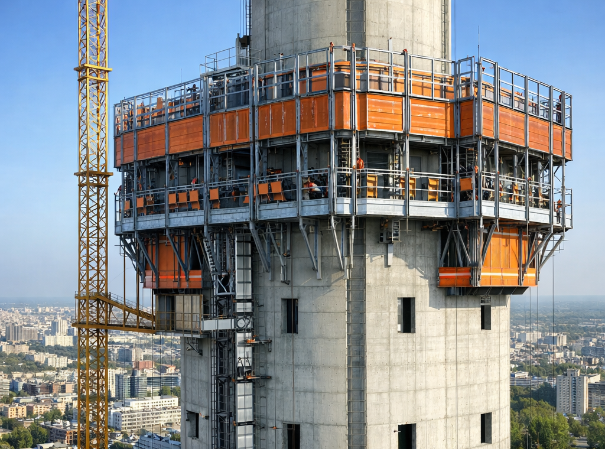
High-rise construction requires repeated vertical cycles that involve reinforcement installation, formwork positioning, concrete pouring, curing, and formwork relocation. In traditional construction workflows, relocating formwork between floors often requires cranes, additional labor, and coordination between multiple teams. These repeated operations can slow progress, especially when the project involves dozens of vertical construction stages. A self climbing formwork system addresses this challenge by allowing the entire formwork assembly to climb along the structure as construction progresses. Because the system moves together with the building, it helps create a more stable and predictable workflow for contractors working on tall concrete structures such as building cores and reinforced shear walls.
One of the most noticeable efficiency improvements associated with climbing formwork systems is the reduced reliance on tower cranes for repositioning formwork equipment. In conventional formwork methods, cranes are often required to lift panels, scaffolding platforms, and support structures to the next construction level. These operations require careful coordination, and on large construction sites cranes are typically needed for multiple tasks such as lifting materials, transporting reinforcement cages, and installing structural elements. When cranes are frequently used to move formwork components, construction teams may face delays while waiting for crane availability.
Self climbing formwork systems minimize this issue by using hydraulic climbing mechanisms that lift the formwork assembly along guide rails attached to the concrete structure. Instead of dismantling and lifting individual components, the entire system—including working platforms and formwork panels—moves upward as a unit. This process significantly reduces the number of crane cycles required during the vertical construction phase. As a result, crane resources can be reserved for other critical site activities, improving overall construction coordination.
Another efficiency advantage comes from the faster transition between construction levels. After the concrete for a particular floor or wall segment has reached the required strength, the hydraulic climbing system lifts the formwork to the next position. Because the system remains assembled during this process, contractors avoid the time-consuming dismantling and reinstallation that occurs with traditional formwork methods. Over multiple construction cycles, this difference can have a noticeable effect on project timelines.
The ability to move the formwork system quickly also helps construction teams maintain a steady working rhythm. Reinforcement installation, concrete pouring, and curing can follow a consistent schedule from one level to the next. When the same process is repeated across many floors, even small improvements in efficiency can accumulate into meaningful reductions in overall construction time.
Large high-rise buildings often contain central reinforced concrete cores that extend from the foundation to the uppermost levels of the structure. These cores house elevator shafts, stairwells, and service shafts, and they require precise and continuous construction over many vertical stages. Maintaining uninterrupted workflow during this process is essential because delays at one level can affect progress on subsequent floors.
The climbing mechanism used in self climbing formwork for vertical concrete structures supports a predictable and repeatable construction sequence. Instead of dismantling scaffolding and formwork systems after each level is completed, the climbing formwork remains attached to the structure and advances upward as the building grows. This continuity helps reduce interruptions between construction stages.
Another advantage of continuous workflow is improved coordination between construction teams. Reinforcement workers, formwork technicians, and concrete placement crews can follow a consistent operational schedule because the formwork system moves in a planned sequence. When teams become familiar with the cycle of operations, the construction process tends to become more organized and efficient.
The following table illustrates how workflow continuity differs between traditional formwork systems and climbing formwork systems in high-rise construction:
Workflow Factor | Traditional Formwork | Self Climbing Formwork |
Formwork relocation method | Crane lifting and manual repositioning | Hydraulic climbing mechanism |
System dismantling between floors | Often required | Not required |
Construction cycle predictability | Moderate | Higher |
Coordination between teams | More complex | More streamlined |
By supporting continuous upward construction, climbing formwork systems help reduce downtime between construction stages. This improvement is particularly important in projects involving tall reinforced concrete structures where the vertical construction phase represents a significant portion of the overall project timeline.
Working at height is one of the most challenging aspects of high-rise construction. Workers must operate in environments where the risk of falls, equipment movement, and structural instability must be carefully managed. Formwork systems play a critical role in maintaining safe working conditions because they provide the platforms and structural support from which workers perform reinforcement installation, concrete pouring, and inspection tasks. Climbing formwork systems integrate safety features directly into their design, helping to create controlled working environments as the building rises.
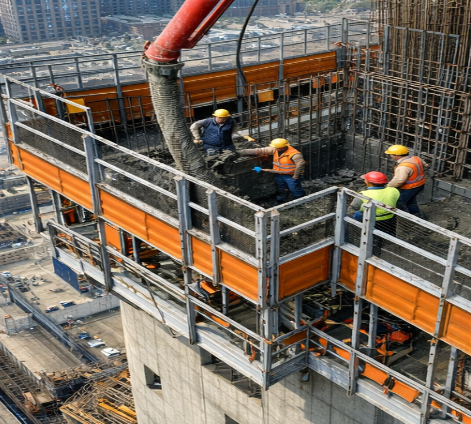
Self climbing formwork systems typically include multi-level working platforms that are attached directly to the structure. These platforms move upward together with the formwork during the climbing process, meaning workers remain within the same structured working environment throughout the construction cycle. Because the platforms are integrated into the formwork system, they provide consistent access areas for reinforcement installation, formwork adjustments, and inspection activities.
These platforms often incorporate guardrails, edge protection, and defined walking paths that help create safer working zones at elevated heights. Instead of relying on temporary scaffolding that must be rebuilt at every level, climbing formwork systems maintain a continuous protective structure around the working area. This reduces the number of temporary structures required on the construction site and helps maintain a more organized environment.
The design of these integrated platforms also helps improve operational efficiency. Workers can access tools, reinforcement materials, and formwork components within a defined workspace, reducing unnecessary movement across unstable surfaces. Because the working area remains attached to the formwork system, crews can focus on completing construction tasks without repeatedly rebuilding their working environment.
Manual handling of heavy formwork panels is a common source of injuries in construction projects. Traditional formwork systems often require workers to dismantle and move large components between construction stages. These operations can involve lifting, carrying, and aligning heavy materials in elevated environments, increasing the risk of accidents.
Hydraulic climbing systems reduce the need for such manual repositioning tasks. Instead of moving individual panels manually, the entire formwork assembly is lifted through a controlled mechanical process. This significantly decreases the number of heavy lifting operations required during vertical construction.
Lower manual handling requirements can improve overall site safety in several ways:
● Workers spend less time performing physically demanding lifting tasks.
● Fewer workers are required to reposition large structural components.
● The risk of injuries related to repetitive lifting or equipment movement is reduced.
Because the climbing process is controlled through hydraulic mechanisms, the movement of the formwork system is also more predictable. Workers can remain on stable platforms while the system climbs, rather than working around cranes and suspended loads.
These operational characteristics contribute to the safety advantages of self climbing formwork systems in projects where workers must operate many floors above ground level.
High-rise buildings require precise alignment of structural components to ensure stability and proper load distribution. In reinforced concrete structures, vertical elements such as shear walls and building cores must maintain consistent geometry across many construction levels. Even small alignment errors at lower levels can accumulate as the building height increases, potentially affecting structural integrity or the installation of mechanical systems. Climbing formwork systems help maintain precision during the construction process by providing stable positioning and repeatable operational procedures.
Climbing formwork systems typically move along guide rails or anchored climbing brackets attached to the concrete structure. This guided movement helps maintain the correct positioning of the formwork relative to the building’s vertical axis. Because the system remains connected to the structure during the climbing process, alignment can be maintained more consistently than with systems that require dismantling and relocation.
Accurate alignment is particularly important when constructing central building cores. These cores often house elevator shafts, stairwells, and mechanical service spaces, all of which require precise dimensions and positioning. If the formwork deviates from the intended alignment, the resulting structural components may require corrective adjustments that can delay the project.
Maintaining accurate alignment during vertical construction also helps ensure that load-bearing elements remain properly positioned within the structural system. When each level is constructed according to the same geometric reference points, the overall structural performance of the building becomes more predictable.
Another factor influencing structural precision is the stability of the formwork during concrete pouring and curing. Fresh concrete exerts pressure on formwork panels, and any movement or vibration in the system can affect the final surface quality and wall geometry. Climbing formwork systems are typically anchored to the structure during operation, providing a stable platform for concrete placement.
Stable formwork conditions support consistent wall thickness and uniform surface finishes. Because the system remains assembled across multiple construction cycles, the positioning of panels and support elements can be maintained with minimal variation from one level to the next.
The following table summarizes how stability influences structural quality in vertical construction:
Construction Factor | Impact on Structural Quality |
Formwork stability | Maintains accurate wall geometry |
Guided climbing alignment | Reduces vertical deviation |
Secure anchoring | Limits vibration during pouring |
Repeatable construction cycles | Improves consistency across floors |
Consistency becomes increasingly important when the same construction sequence must be repeated dozens of times in tall buildings. By maintaining stable alignment and standardized procedures, climbing formwork systems support reliable quality control in self climbing formwork systems for high rise buildings.
Large construction projects involve substantial investment in labor, equipment, and site logistics. While the installation of a climbing formwork system requires planning and technical setup, the operational efficiencies gained during the vertical construction phase can influence the overall cost structure of a project. Because high-rise buildings involve repeated construction cycles across many floors, improvements in efficiency can accumulate over time and affect overall resource utilization.
One of the most significant operational advantages of climbing formwork systems is the reduced reliance on heavy lifting equipment during formwork relocation. In traditional construction systems, cranes are frequently used to move formwork panels, scaffolding components, and support structures between levels. These operations not only consume crane time but also require coordination between multiple site activities.
When the formwork system climbs using hydraulic mechanisms, fewer crane operations are required. This can help free crane capacity for other tasks such as lifting reinforcement cages, transporting building materials, or installing prefabricated components. Over the duration of a high-rise project, reduced crane usage can simplify site logistics and improve scheduling efficiency.
Predictable scheduling is another factor contributing to cost efficiency. Because climbing operations do not depend heavily on crane availability, construction teams can plan reinforcement installation, formwork climbing, and concrete placement in a more consistent sequence. This predictability helps reduce delays that may occur when equipment availability disrupts the construction schedule.
High-rise projects often involve constructing dozens of vertical levels, each requiring the same set of operations. When the formwork system supports efficient construction cycles, the benefits become more significant as the number of floors increases.
In repetitive construction environments, the operational characteristics of a climbing system influence how labor, equipment, and time are distributed throughout the project. A system that allows efficient transitions between levels can help maintain steady progress and reduce idle time for construction teams.
Key factors influencing resource efficiency include:
● Reduced time spent dismantling and reinstalling formwork components
● Improved coordination between reinforcement, formwork, and concrete crews
● Stable working platforms that remain in place during construction cycles
Over many construction stages, these operational advantages contribute to the broader impact of how self climbing formwork improves construction efficiency. While each individual cycle may only save a limited amount of time or resources, the cumulative effect across multiple floors can influence the overall duration and resource allocation of a high-rise construction project.
Self climbing formwork improves high-rise construction. It supports safer work and steady progress.The system helps build cores and shear walls.
It also improves efficiency and precision.Tianjin Easy Scaffolding Co., Ltd. provides reliable systems. Their solutions support modern vertical construction projects.
A: Self climbing formwork is used to build vertical concrete structures such as building cores, elevator shafts, and shear walls in high-rise construction.
A: Self climbing formwork moves upward using hydraulic systems, reducing crane use and enabling faster vertical construction cycles.
A: Yes. Self climbing formwork is designed for tall structures where repeated vertical concrete construction requires stable and continuous workflows.
A: Self climbing formwork includes integrated working platforms and guardrails, helping maintain safer working conditions during high-altitude construction.


