Definition of Cuplock Scaffolding
What does cuplock scaffolding mean in construction
Cuplock scaffolding is a modular access and support structure that uses a specially designed cup-and-blade locking joint to connect all main structural members.
In real construction practice, cuplock scaffolding refers to a standardized framework formed by vertical standards, horizontal ledgers and diagonal braces, all locked together at fixed node points.
Unlike traditional tube and coupler scaffolding, cuplock scaffolding is an engineered system.
All components are manufactured according to unified dimensions and connection rules, which helps contractors achieve:
faster site installation
better alignment accuracy
consistent structural performance
easier quality control on site
This systemized design is one of the key reasons why cuplock scaffolding is widely adopted for both access and heavy-duty support applications.
What is a cuplock scaffolding system
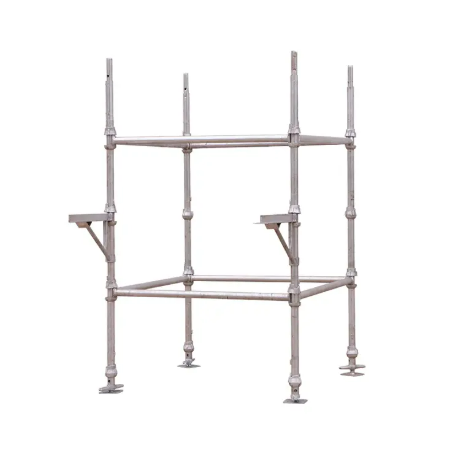
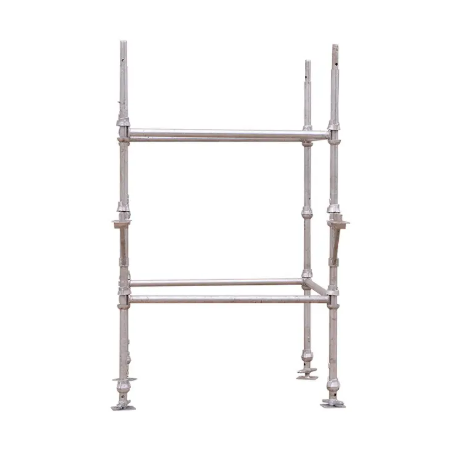
A cuplock scaffolding system is a complete set of compatible structural components designed around the same cup joint connection principle.
In a standard cuplock scaffolding system, the main elements normally include:
cuplock standards (vertical members)
cuplock ledgers (horizontal members)
diagonal braces
adjustable base jacks and U-head jacks
steel planks, guardrails and access components
The system concept means that every part is designed to work together structurally.
This allows engineers and contractors to calculate load capacity more accurately and to design safer and more reliable scaffold structures.
Why cuplock scaffolding is widely used worldwide
Cuplock scaffolding is widely used in infrastructure, industrial plants, commercial buildings and civil engineering projects because it provides a good balance between strength, speed and flexibility.
Its global popularity mainly comes from the following advantages:
high load-bearing capability for shoring and formwork support
fast erection and dismantling on site
simple and reliable node connection
easy adaptation to repetitive and large-scale layouts
For contractors handling tight schedules and complex site conditions, cuplock scaffolding offers a practical and efficient solution.
How Does Cuplock Scaffolding Work
The cuplock node connection principle
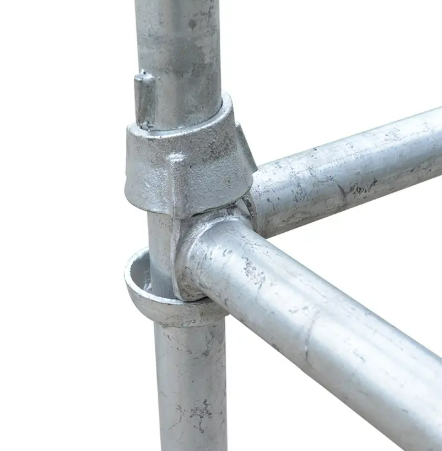
The core of cuplock scaffolding is its unique cup joint.
Each vertical standard is welded with fixed lower cups at regular intervals.
A movable upper cup is used to lock ledgers and braces into position.
When several blade ends are placed on the lower cup and the upper cup is rotated down, a firm and rigid joint is created.
This joint allows multiple members to meet at one node, forming a stable load transfer point in the structure.
This design eliminates the need for bolts, nuts or loose couplers, which significantly simplifies site operations.
How ledgers and braces are fixed at one node
At one node, the cuplock system can connect:
The blade ends of these members rest on the lower cup and are locked by the upper cup.
This connection method provides:
quick locking in one simple movement
uniform joint stiffness across the whole structure
reliable resistance to both vertical and horizontal forces
It also reduces the risk of incorrect installation compared with traditional scaffolding fittings.
How the cuplock scaffolding system is assembled on site
A typical erection process of a cuplock scaffolding system usually includes:
positioning adjustable base jacks on the foundation
installing cuplock standards vertically
connecting ledgers and braces at each node level
adding platforms, guardrails and access elements
Because all components are standardized and pre-engineered, most assemblies can be completed with minimal tools and fewer installation steps.
This significantly improves installation speed and reduces overall labor demand.
How cuplock scaffolding is dismantled efficiently
Dismantling is carried out by rotating the upper cup and releasing the blade ends.
Components can be removed quickly and stacked in an organized manner.
This efficient dismantling process:
shortens site clearing time
improves material reuse efficiency
reduces damage to components during handling
Main Components of Cuplock Scaffolding System
Cuplock standard (vertical)
The cuplock standard is the main vertical load-bearing member in the system.
Its main roles include:
transferring vertical loads to the base or foundation
providing connection points for ledgers and braces
forming the primary load-carrying grid of the structure
The cups are welded at fixed spacing along the standard, allowing fast and accurate positioning of all horizontal and diagonal members.
Cuplock ledger (horizontal)
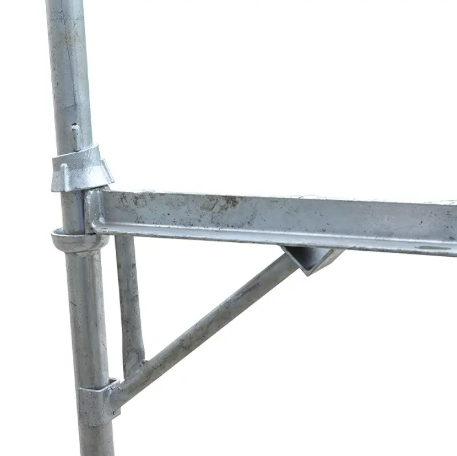
Cuplock ledgers connect adjacent standards horizontally and support working platforms and decks.
They are responsible for:
distributing loads between vertical members
controlling the horizontal geometry of the scaffold
supporting planks and edge protection systems
The forged blade ends ensure accurate and firm engagement with the cuplock joint.
Cuplock brace
Diagonal braces are used to improve the lateral stability of the structure.
Their main functions are:
reducing horizontal movement
improving resistance to wind and dynamic loads
increasing overall rigidity of the cuplock scaffolding system
Bracing is especially important for high-rise access scaffolds and heavy shoring towers.
Adjustable base jack and U-head jack
These components are used to:
level the scaffold on uneven ground
transfer loads safely to the slab or foundation
support beams and formwork systems in shoring applications
They play a critical role in controlling load distribution and installation accuracy.
Related accessories in cuplock scaffolding system
A complete cuplock scaffolding system is usually equipped with:
steel planks and decks
guardrails and toe boards
access ladders or stair units
safety locking components
These accessories allow the system to be configured as safe and efficient working platforms.
Key Features of Cuplock Scaffolding
High load-bearing capacity
Cuplock scaffolding is designed to carry both heavy vertical loads and horizontal forces.
This makes it suitable for demanding applications such as formwork support, slab shoring and industrial maintenance structures.
Fast erection and dismantling
The cup joint allows several members to be locked in one operation, which significantly reduces installation time compared with traditional scaffolding systems.
Strong and stable node connection
The blade and cup locking mechanism creates a rigid and repeatable joint, helping the entire structure maintain stable geometry during use.
Flexible modular configuration
The standardized layout allows cuplock scaffolding to be configured for:
straight and curved façades
multi-level access platforms
complex industrial frames
large shoring towers
Long service life and reusable structure
With proper surface treatment and manufacturing quality, cuplock scaffolding components can be reused many times, reducing long-term equipment costs.
Advantages of Using Cuplock Scaffolding
Labor cost saving
The simplified connection method reduces installation steps and shortens working time on site, helping contractors lower labor input.
High efficiency for large projects
Cuplock scaffolding performs particularly well in projects with:
Reduced material loss on site
All components are systemized and easy to manage, which helps prevent excessive loss of small fittings and improves inventory control.
Safer working platform compared with traditional tube scaffolding
The engineered joint design and standardized geometry help reduce installation errors and improve overall stability, providing a safer working environment for construction teams.
Applications of Cuplock Scaffolding
Cuplock scaffolding for access platforms
Cuplock scaffolding is widely used to build temporary access platforms for façade works, installation, maintenance and finishing operations.
Its modular layout allows contractors to create:
continuous working decks at different heights
safe edge protection systems
flexible access routes for workers and materials
The rigid node connection helps maintain platform stability even under intensive daily use.
Cuplock scaffolding for formwork and shoring support
One of the most important applications of cuplock scaffolding is concrete formwork support.
The system is commonly used to support:
slab formwork
beam formwork
table formwork systems
Because of its high load-bearing capacity and reliable vertical load transfer, cuplock scaffolding performs well in heavy shoring conditions.
Cuplock scaffolding for slab and beam support
Cuplock standards combined with U-head jacks can directly support timber beams, aluminum beams and steel beams.
This configuration is especially suitable for:
The regular node spacing allows accurate height control and stable load distribution.
Cuplock scaffolding for industrial and infrastructure projects
Cuplock scaffolding is also widely applied in:
In these projects, the system is valued for its fast erection speed, high safety level and strong adaptability to complex structures.
Cuplock Scaffolding vs Other Scaffolding Systems
Cuplock scaffolding vs ringlock scaffolding
Both systems are modular scaffolding solutions, but they differ in connection principle and practical application focus.
Connection method comparison
Cuplock scaffolding uses a cup-and-blade locking joint, while ringlock scaffolding relies on a rosette disc with wedge connections.
The cuplock joint allows several members to be locked with one simple rotation of the upper cup.
Flexibility comparison
Ringlock scaffolding generally offers more angle connection options.
Cuplock scaffolding focuses more on repetitive, regular layouts and heavy-duty support structures.
Typical project usage comparison
Cuplock scaffolding is widely preferred for:
Ringlock scaffolding is often selected for more irregular geometries and complex façade shapes.
Cuplock scaffolding vs tube and coupler scaffolding
Installation efficiency comparison
Traditional tube and coupler scaffolding requires many loose fittings and bolts.
Cuplock scaffolding eliminates most loose components, allowing much faster installation.
Safety and stability comparison
The standardized node connection of cuplock scaffolding reduces the risk of incorrect assembly and improves overall structural consistency compared with traditional tube scaffolding.
Load Capacity and Structural Performance of Cuplock Scaffolding
Why cuplock scaffolding is suitable for heavy-duty applications
Cuplock scaffolding is designed as a load-carrying system rather than only an access scaffold.
Its vertical standards and rigid joints provide direct and efficient load paths.
This makes it suitable for:
Vertical load and horizontal load performance
The vertical load is transferred through the standards directly to the base jacks and foundation.
Horizontal forces are controlled by ledgers and diagonal bracing, which stabilize the structure against:
wind loads
construction activities
dynamic impacts
Influence of spacing and configuration on load capacity
The actual load capacity of a cuplock scaffolding system depends heavily on:
Proper engineering layout is essential to achieve safe performance.
Common Specifications of Cuplock Scaffolding System
Standard tube diameter and thickness
Common cuplock standards and ledgers are produced with standardized steel tube diameters and wall thickness to ensure compatibility and predictable strength.
Common ledger lengths
Cuplock ledgers are supplied in multiple modular lengths, which allow flexible bay sizes for different project layouts.
Typical cup joint spacing
The fixed spacing between cup joints on standards allows rapid alignment of ledgers and braces and ensures consistent vertical module heights.
Surface treatment options
Depending on project requirements and service environment, cuplock scaffolding can be supplied with:
HDG treatment is commonly chosen for long-term and outdoor use.
How to Choose a Suitable Cuplock Scaffolding System
According to project type
Access scaffolding and heavy shoring structures have different design priorities.
The configuration of the cuplock scaffolding system should match the actual application.
According to working height and load requirement
Higher structures and heavier loads require:
According to local standards and site conditions
Local regulations, wind conditions, foundation capacity and available working space should all be considered during system selection.
According to supplier manufacturing capability
A reliable supplier should be able to provide:
stable dimensional accuracy
consistent welding quality
verified material certificates
complete system components
Installation and Safety Guidelines for Cuplock Scaffolding
Basic installation sequence of cuplock scaffolding
A standard erection process normally includes:
setting out base positions
adjusting base jacks and leveling
installing standards
connecting ledgers and braces level by level
installing platforms and safety components
Inspection before use
Before operation, the scaffold should be checked for:
proper locking of all cup joints
correct bracing installation
stable foundation and base support
Safe working practices on cuplock scaffolding system
Good site practice includes:
controlling working loads on platforms
preventing unauthorized dismantling
maintaining clear access routes
Common installation mistakes to avoid
Typical mistakes include:
Quality Standards and Manufacturing Requirements for Cuplock Scaffolding
Material requirements
High-quality structural steel is essential to ensure strength and durability.
Welding and forging quality
Cup joints, blades and welded parts must be produced with strict quality control to ensure proper load transfer.
Dimensional accuracy and tolerance
Accurate dimensions are critical for fast assembly and tight joint performance.
Surface protection and corrosion resistance
Proper surface treatment significantly improves service life and reduces maintenance costs.
FAQs
Is cuplock scaffolding suitable for heavy formwork support
Yes. Cuplock scaffolding is widely used for slab and beam shoring because of its high load capacity and stable joint performance.
Can cuplock scaffolding be used for high-rise projects
With correct engineering design and proper bracing, cuplock scaffolding can be applied to high-rise access and shoring structures.
What is the difference between cuplock scaffolding and cuplock scaffolding system
Cuplock scaffolding usually refers to the assembled structure on site, while a cuplock scaffolding system refers to the complete set of compatible components and technical design rules.
How long can cuplock scaffolding be reused
With proper maintenance and corrosion protection, cuplock scaffolding can be reused for many years across multiple projects.
Why Cuplock Scaffolding Is a Reliable Construction Solution
Cuplock scaffolding has proven to be a highly efficient and reliable solution for modern construction, combining fast installation, strong structural performance and flexible modular design.
From access platforms to heavy-duty formwork support, a well-designed cuplock scaffolding system can significantly improve project efficiency, safety and cost control.
As a professional cuplock scaffolding manufacturer, Tianjin Easy Scaffolding Co., Ltd provides a complete range of cuplock standards, ledgers, braces, jacks and accessories manufactured under strict quality control.
With an integrated production and export supply chain, advanced welding and galvanizing capabilities, and extensive international project experience, the company is able to deliver:
stable and consistent product quality
full-system supply for access and shoring applications
engineering-oriented component compatibility
reliable delivery for large-scale overseas projects
By choosing an experienced manufacturer with strong technical and production capability, contractors and distributors can ensure that their cuplock scaffolding projects are built on a safe, efficient and long-term reliable foundation.