
English 
T: +86-13212036031
E: mason@easy--scaffolding.com
E: mason@easy--scaffolding.com
Room No.203, Building No.5, Huijin Plaza, West Fifth Road No.35, Tianjin Airport Economic Zone, Tianjin, China

Views: 0 Author: Site Editor Publish Time: 2026-03-13 Origin: Site


Why do skyscrapers rise so fast? Tall buildings need smarter construction. Traditional methods slow vertical work. Self climbing formwork helps structures rise efficiently. It supports concrete cores and tall walls.
In this article, you will learn how it works. You will also see why it suits high-rise construction.
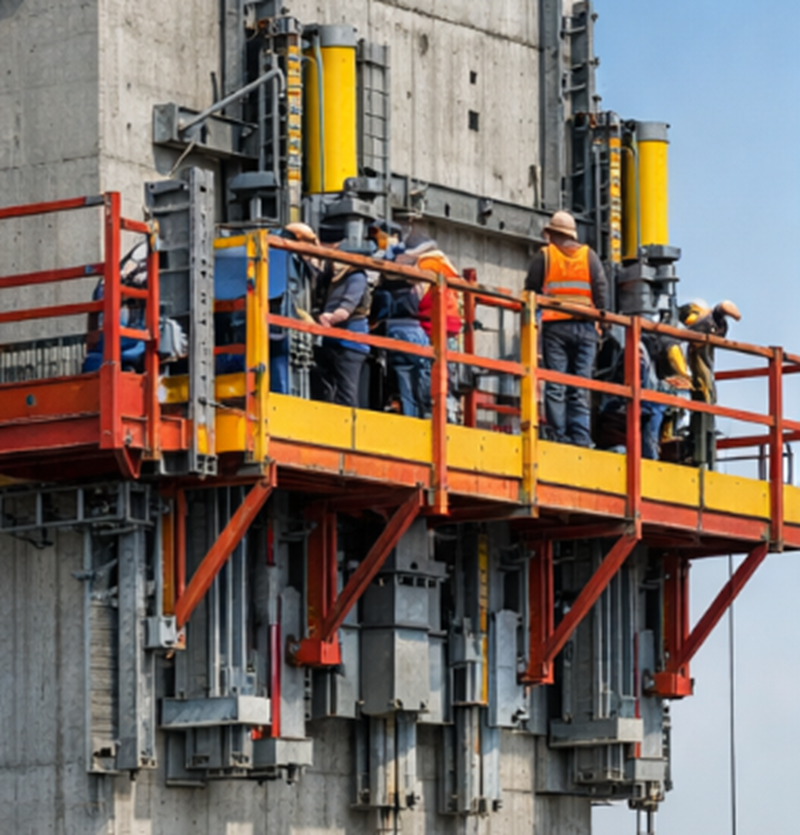
Self climbing formwork is specifically designed to support the vertical construction processes required in high-rise buildings. In modern cities, buildings continue to grow taller, and traditional construction methods often struggle to keep pace with the technical demands of vertical development. High-rise projects involve repeated construction cycles, strict alignment requirements, and complex coordination between structural elements. For these reasons, construction systems must not only support the weight and shape of fresh concrete but also adapt efficiently as the structure rises floor by floor.
Unlike conventional formwork systems that rely heavily on cranes and frequent dismantling, this system is integrated directly with the building structure and moves upward progressively as construction advances. Traditional formwork often requires crews to dismantle panels, lift them with tower cranes, and reinstall them at the next level after each concrete pour. This process can slow the overall construction schedule and increase coordination challenges on busy construction sites. In contrast, self climbing formwork remains attached to the structure and climbs upward in a controlled manner, reducing interruptions between construction stages.
The technology is commonly applied in reinforced concrete cores, shear walls, and elevator shafts where repetitive vertical construction is required across many floors. These structural components typically extend throughout the entire height of a building and must maintain consistent geometry and alignment from the base to the top. Because the formwork system climbs together with the structure, it helps maintain precision during the construction of these tall vertical elements. This makes the system particularly suitable for high-rise buildings where structural cores and wall systems play a critical role in overall stability.
By combining structural support frames, climbing mechanisms, and working platforms into one integrated assembly, the system enables construction teams to maintain a stable and continuous workflow throughout the building process. The integrated platforms provide safe access for workers to install reinforcement, adjust formwork panels, and perform concrete operations at height. At the same time, the climbing mechanism allows the entire system to move upward as soon as each concrete section has cured sufficiently. This coordinated operation supports a predictable construction cycle, which is especially valuable in projects where dozens of floors must be completed in sequence.
In addition, the design of self climbing formwork allows multiple construction activities to take place within the same working zone. Crews can prepare reinforcement for the next section while previously poured concrete is curing, which helps reduce idle time between construction stages. By improving the organization of vertical construction tasks, the system contributes to a smoother and more efficient building process as the structure continues to rise.
The operating principle of a self climbing formwork system is based on attaching the formwork assembly to previously completed sections of the building structure and allowing the system to climb upward as each construction stage is completed. After the concrete in one level reaches sufficient strength, the entire formwork structure—including panels, support frames, and working platforms—moves upward to the next construction position. Because the system remains connected to the structure during this process, it eliminates the need for repeated dismantling and relocation of formwork panels.
Several structural components work together to maintain the stability and functionality of the system during operation. These include climbing brackets that anchor the system to the concrete structure, guide rails that control the vertical movement path, structural frames that distribute loads, and working platforms that allow construction crews to perform tasks safely at height. The integration of these components creates a rigid framework that supports both the weight of the formwork and the forces generated during concrete pouring.
The interaction between these structural elements ensures that the system remains aligned with the building structure throughout the construction cycle. This alignment is essential when constructing tall reinforced concrete walls and cores, where even small deviations can affect the accuracy of the building geometry. By maintaining consistent positioning during each stage of the construction process, self climbing formwork supports both structural precision and operational stability.
A key technical feature of self climbing formwork is the hydraulic climbing mechanism that allows the system to move vertically without external lifting equipment. Hydraulic cylinders are typically connected to climbing rails or brackets anchored in the previously completed concrete structure. Once the concrete reaches the required curing strength, these cylinders activate and gradually lift the entire formwork assembly to the next construction level.
This lifting process is controlled and synchronized to ensure that the system moves evenly and remains stable throughout the operation. The climbing motion usually occurs in incremental steps, allowing the formwork structure to maintain alignment with the building core or wall system. Because the lifting mechanism is integrated within the formwork assembly, the system can advance independently of tower cranes, which are often needed for other construction tasks on high-rise projects.
The construction cycle associated with self climbing formwork follows a repeatable sequence that supports continuous vertical development of the building structure. Typically, reinforcement bars are installed within the formwork zone, after which the concrete is poured and allowed to cure. Once the curing stage is complete, the hydraulic mechanism lifts the system to the next level, where the process begins again. This cyclical workflow allows construction teams to maintain a consistent pace of work as the building height increases, making the system particularly suitable for high-rise structures with repetitive vertical layouts.
High-rise construction projects involve numerous logistical and structural challenges, including the need to manage vertical construction sequences, coordinate heavy equipment, and maintain safety conditions at significant heights. Self climbing formwork addresses many of these challenges by providing a system that moves upward with the structure and supports repeated construction cycles. As a result, the technology has become widely used in the construction of reinforced concrete cores, shear walls, and other vertical building components.
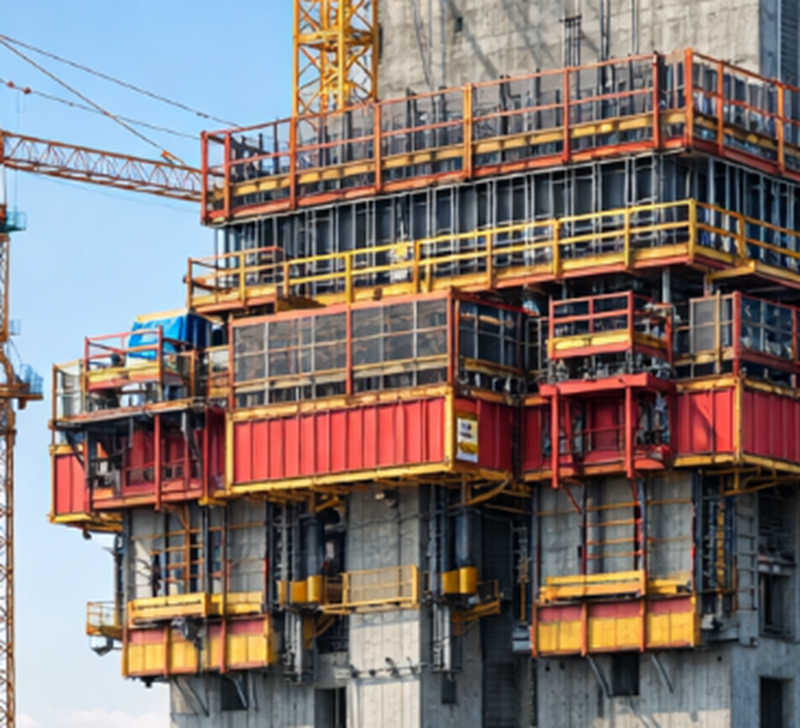
One of the primary advantages of self climbing formwork lies in its ability to support efficient vertical construction. In high-rise projects, structural cores and wall systems must often be built continuously through many floors, and the speed at which these elements rise can significantly influence the overall construction schedule. Because self climbing formwork remains attached to the structure, construction crews can transition from one stage of work to the next without dismantling and relocating large formwork assemblies.
The system also reduces the need for crane operations when repositioning formwork. In traditional construction methods, cranes are required to lift formwork panels, working platforms, and scaffolding components from one level to another. However, in self climbing systems the integrated hydraulic mechanism performs this lifting function internally. This allows cranes to focus on lifting structural materials, equipment, and prefabricated components rather than moving formwork structures.
The impact of this design becomes particularly noticeable in dense construction environments where crane availability is limited. By reducing competition for crane time, self climbing formwork can help improve coordination across multiple construction activities occurring simultaneously on a high-rise building site.
Construction Factor | Influence of Self Climbing Formwork |
Vertical construction speed | Supports continuous upward construction cycles |
Equipment coordination | Reduces dependence on cranes for formwork lifting |
Workflow consistency | Enables predictable and repetitive construction stages |
Through these advantages, the system contributes to a more organized construction process and supports efficient progression of the building structure.
Working conditions at high elevations are a significant concern in high-rise construction. Construction crews must install reinforcement, adjust formwork panels, and perform concrete operations while operating several floors above ground level. Self climbing formwork systems typically incorporate integrated working platforms, safety guardrails, and enclosed workspaces that help create a more controlled environment for these activities.
These built-in working areas allow crews to perform tasks such as reinforcement placement and formwork adjustments without relying on temporary scaffolding systems. Because the platforms move together with the formwork assembly, workers remain within a consistent working environment throughout the vertical construction process. This continuity can help reduce disruptions in work routines and improve operational safety.
Another important benefit of self climbing formwork is the consistency it can provide in concrete surface quality and structural alignment. Since the system remains securely attached to the building during each construction cycle, the formwork panels maintain stable positioning while concrete is poured and cured. This stability helps ensure that vertical structural elements such as shear walls and building cores maintain accurate geometry across multiple floors.
Consistent alignment is particularly important in high-rise structures where small deviations in earlier floors could accumulate and affect the structural accuracy of the building as construction progresses upward.
Concrete core structures play a central role in the structural design of many high-rise buildings. These cores typically contain elevators, staircases, and mechanical systems while also functioning as a primary structural element that supports vertical loads and resists lateral forces such as wind or seismic activity. Because the core extends continuously through the entire height of the building, its construction must proceed in a carefully controlled vertical sequence.
Self climbing formwork is particularly suitable for this type of construction because the system can move upward together with the structural core. As each level of concrete is completed and cured, the formwork assembly climbs to the next level, allowing the core to be constructed progressively without the need for extensive dismantling or relocation of formwork structures.
Elevator shafts and stair cores are enclosed vertical structures that must maintain precise alignment across many floors. Any deviation in wall alignment can create difficulties when installing elevator systems or stair assemblies later in the project. Self climbing formwork helps address this challenge by providing a stable framework that maintains consistent positioning during both the concrete pouring and climbing stages of construction.
In addition to elevator and stair shafts, high-rise buildings often rely on reinforced concrete shear walls for structural stability. These vertical wall systems are designed to resist lateral forces that act on tall buildings, and they typically extend through multiple floors as part of the building core or surrounding structural framework.
The ability of self climbing formwork to support continuous wall construction makes it well suited to these applications. As the formwork climbs along the structure, the same system can be used repeatedly to construct successive sections of the wall. This repeatable construction process allows crews to maintain consistent structural alignment and construction quality throughout the height of the building.
Although self climbing formwork offers significant advantages in high-rise construction, its implementation requires careful engineering evaluation and construction planning. The system interacts directly with the structural framework of the building, which means that factors such as load transfer, anchoring conditions, and construction sequencing must be carefully analyzed before installation.
The first major consideration involves structural planning and load transfer. When a self climbing formwork system is attached to a building, the forces generated by the formwork structure, working platforms, and construction activities must be transferred safely into the concrete structure. Engineers must determine appropriate anchoring points and evaluate the load-bearing capacity of the structure at each stage of construction. These evaluations help ensure that the system remains stable while supporting construction operations.
Coordination between different construction activities is also essential. Reinforcement placement, formwork installation, and concrete pouring must occur in a carefully planned sequence so that each stage of the construction cycle can proceed smoothly. If these activities are not properly synchronized, delays in one task can disrupt the entire vertical construction workflow.
Another factor that influences system implementation is the geometry and scale of the building. High-rise projects can vary widely in terms of core dimensions, wall thickness, and structural layout. In some cases, formwork configurations may need to be adjusted to accommodate different wall shapes or structural elements within the building. By adapting the system to the specific requirements of each project, construction teams can ensure that the formwork continues to operate effectively as the building rises to greater heights.
High-rise buildings need safe construction methods. Vertical structures require efficient systems. Self climbing formwork helps projects rise smoothly. It supports concrete cores and tall shear walls. Tianjin Easy Scaffolding Co., Ltd. provides advanced systems. Their hydraulic climbing design improves safety and workflow. These solutions support modern high-rise construction needs.
A: Self climbing formwork is a system that moves upward with the structure, supporting continuous concrete wall and core construction in tall buildings.
A: Self climbing formwork enables steady vertical progress, reduces crane dependency, and supports repetitive construction cycles in high-rise structures.
A: Self climbing formwork is typically used for reinforced concrete cores, elevator shafts, stair cores, and shear wall construction in tall buildings.
A: Choosing self climbing formwork depends on building height, structural layout, core design, and coordination with reinforcement and concrete placement.


